
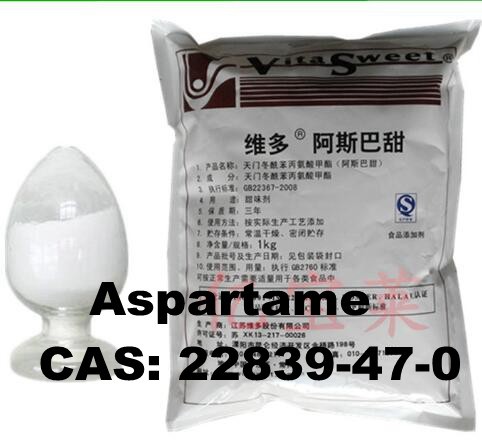
Aspartame is a sweetener and a commonly used food additive in the world. It was approved for use in China in 1986. The chemical name of aspartame is L-aspartate-L-phenylalanine methyl ester, which is a non-carbohydrate sweetener. At room temperature, aspartame is a white crystalline powder with a refreshing sweet taste, slightly soluble in water, insoluble in ethanol and insoluble in oil. China's food additive standard GB2760-86 stipulates that it can be used in soda, milk beverage, vinegar, coffee beverage and other foods.
In 1981, FDA confirmed its status as a food sweetener and determined that its maximum daily intake (ADI) was 50mg/kg body weight. In 1981, the ADI value approved by the World Joint Committee on Food Additives ((JECFA)) was 40mg/ kg body weight. In the United States, aspartame is the only nutritious strong sweetener approved by FDA.
Aspartate sweet aqueous solution can be hydrolyzed to aspartyl phenylalanine and methanol under certain temperature and acidic pH conditions. Under neutral, alkaline (pH > 7) or heated conditions, or by cyclization to remove methanol to form cyclic aspartyl phenylalanine, namely diketopiperazine. Eventually, aspartyl phenylalanine will continue to be hydrolyzed to form two separate amino acids, aspartic acid and phenylalanine.
The label "contains phenylalanine" because patients with a genetic disease called phenylketonuria are congenitally deficient in an enzyme that causes phenylalanine metabolic disorders that prevent phenylalanine from being converted into tyrosine. Therefore, people with such diseases need to control the intake of phenylalanine, and the label on the package is precisely to remind such consumers. Phenylketonuria is an autosomal recessive genetic disease. The incidence varies with race, about 14000 in the United States, 60000 in Japan and 16500 in China.
Because aspartame is about 200 times sweeter than normal sugar and contains less calories than regular sugar, a gram of aspartame has about 4 kilocalorie calories. However, the amount of aspartame needed to make people feel sweet is so small that its calories can be ignored, so it is also widely used as a substitute for sucrose. It is mainly used instead of sugar in drinks, vitamin lozenges or chewing gum. High temperatures cause it to decompose and lose its sweetness, so aspartame is not suitable for cooking and hot drinks.
Aspartame has a pure sweet taste, and sucrose is very similar to the refreshing sweet taste, no bitter aftertaste and metal taste, is so far successfully developed sweetener closest to sucrose sweetener. There is a synergistic effect when mixed with sucrose or other sweeteners, such as adding 2%-3% to saccharin, which can significantly mask the bad taste of saccharin. Mixed with essence, it has excellent synergistic effect, especially for acidic citrus, lemon, grapefruit, etc., which can make the fragrance lasting and reduce the amount of fragrance.
sweetener Aspartame,food additive sweetener,food additive Aspartame
Contact: Info
Phone: +86-15018706725 (Wechat & Whatsapp)
E-mail: info@flavoursogood.com
Add: East Dongfeng Road, North of Baiyun Ave, 510440, Guangzhou