
Many shops label their products as soy wax and smoke-free. It is true that there is no smoke when I light it, but I don't know if it is all soy wax or a mix of other waxes. Is there any way to test for natural wax myself?
Soy wax is supposed to be the highest quality available. I think scented candles, more importantly, should be concerned about the source of the fragrance, because the commercially available scented candles, all have added fragrance as the source of the fragrance, if the fragrance used is very low end, it is still very harmful to the body
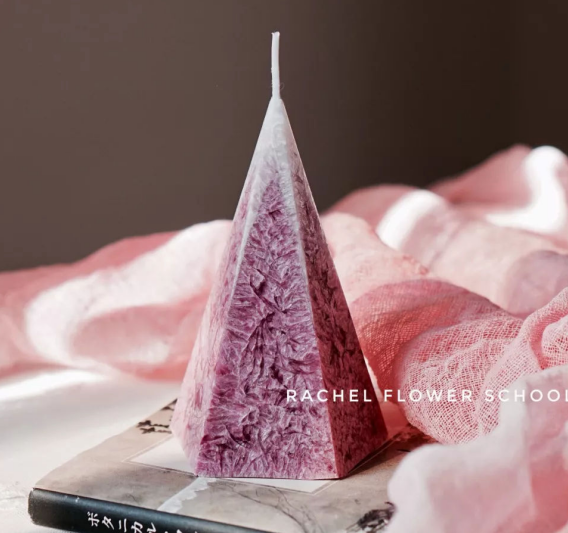
① Are the cheap soy wax scented candles really pure soy wax?
This is a question that none of us can answer unless the maker confesses, but do you believe what he says? A candle that costs more is actually the fragrance (it takes a lot of investment to develop, design and launch a scent specifically for a new product). The cost of wax depends on the formula and of course the production process (some manufacturers have patented formulas that are more expensive); in addition, labour, packaging design, brand value and market positioning are all factors that affect the final price of a product. Cheap candles are not made with good materials and do not have any brand research and development, but if you use them casually, you will be fine.
Does soy wax produce harmful substances?
Any candle that burns has emissions, including carbon dioxide, water and some VOCs (volatile substances). Many people think that paraffin wax releases more harmful substances after burning than soy wax, and they think that soy wax, coconut wax and other plant waxes are the best, but in fact they are just guesses. If you can't lay out the data you are talking nonsense. I do have some reports that prove that paraffin wax candles, soy wax candles, carnauba wax candles and beeswax candles all have lower levels of harmful substances in the gas released than the lower end of the scale (a value that can cause damage to the human body) in combustion performance tests. The point is that they are all similar, except that the products are used in different ways. Plant wax is just a consumer trend with a high market value.
③Can I ask if it is credible that affordable candles claim to be safe?
If you are not sure about the quality, then don't use them. Even with paraffin wax you won't be able to use much of it, the little that is released won't hurt you, don't worry. You're not like the Danes who light 2 or more candles together every day, nor do you inhale candle gas in an airtight room for years on end.
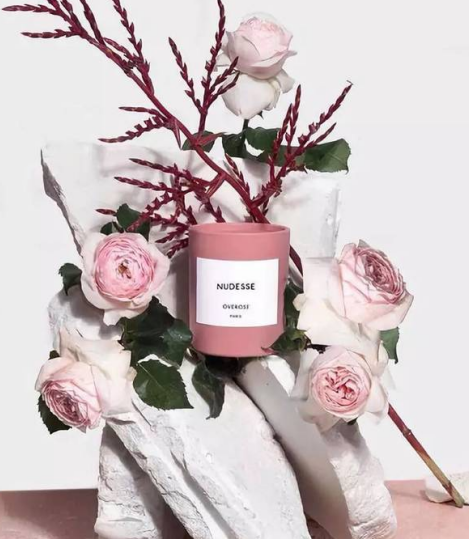
Is there any way to test whether a candle is natural or not?
This cannot be tested by yourself, you need to send it to a third party quality control company, but it may not be possible to detect the presence of paraffin wax, but generally you can only follow the specifications listed in the Chinese QB/T 2903-2007 candle standard to check the safety of the product, such as burning properties, burning time, whether the packaging will crack, etc.
Others believe that the fragrance added to candles must be harmful to the body and that essential oils are better as a miracle oil to cure all diseases and can be applied anywhere. In the world of the scientifically systematic and safe perfumery technician, natural and/or synthetic fragrances are blended with creative precision by professional perfumers, taking into account the details mentioned in the perfumery brief, such as product application and brand positioning, and are collectively known as "frangrance fragrances". "The fragrances are a combination of natural, synthetic and synthetic flavours. Natural flavours, synthetic flavours, they are all organic compounds! They just come from different sources. In addition to this, formal manufacturers of flavours and fragrances (both natural and synthetic) produce and sell their products in accordance with IFRA regulations (MSDS are essential), which vary from country to country, but this is a very strict manufacturing industry. In downstream applications (e.g. personal care products, high-end perfumes, home fragrances, etc.), fragrances are added in accordance with the safety manuals/certificates provided by the upstream manufacturing chain and the safety regulations of the industry, and are not added indiscriminately to a product or in random proportions. Food fragrances, daily products fragrances, cigarettes fragrances, all have their own safety regulations.
In short, if you buy your candles from a proper source, you shouldn't worry about it. I think 50 RMB is fine, some candles at IKEA are not even 50 RMB, they just smell bad, don't worry. Don't worry. If you ventilate the candle after using it, it will have no effect.
I wish you all the best with your candle lighting.
In terms of raw materials, paraffin wax, soy wax, beeswax, coconut wax, carnauba wax, rice bran wax, etc. do vary in price.
Generally speaking, paraffin wax costs around $8 per kilo, soya wax $15-16 per kilo, beeswax is more expensive, with domestic beeswax starting at $22 per kilo and domestic rice bran wax at over $23 per kilo, and if it is imported wax, the price will be even higher.
So, if we talk purely about the raw material of the candle, paraffin wax < soy wax < beeswax, rice bran wax < imported natural beeswax
However, the usual size of a scented candle is around 200g, which means that even for pure soy wax, the cost of 200g is only $3. Soy wax has risen in popularity over the past few years because it has a low melting point and is a cheaper material compared to beeswax.
A simple table comparison will give you an idea.
However, it should be noted that paraffin wax is also divided into three types: fully refined paraffin wax, semi-refined paraffin wax and coarse paraffin wax, each with a different melting point
However, in general, the melting point of soya wax is very low, so you can test whether the candle you buy is paraffin or soya wax by using the following method (it is difficult to test whether it is 100%)
The melting point of paraffin wax is higher than that of soya wax, so you can feel the candle tears with your hands after burning, if you feel hot and there is a lot of black smoke when burning, it is basically paraffin wax; while soya wax and coconut wax have a lower melting point, if the candle tears are warm to the touch after burning, and if they are pure and have almost no black smoke when burning, it should be soya wax or coconut wax. Also, if the candle tears fall on the countertop and can be slowly wiped clean with hot water or melted with a hair dryer, it is basically soy wax or coconut wax that has undergone the hair dryer method of adjusting the candle after a certain time.
Also: paraffin wax candles are not completely undesirable, like Yankee in the USA and many other big brands, which use a mixture of paraffin wax, and Yankee uses a mixture of waxes that have been specially tested and certified by ICAS, and can be used by pregnant women, babies and the elderly.
Contact: Info
Phone: +86-15018706725 (Wechat & Whatsapp)
E-mail: info@flavoursogood.com
Add: East Dongfeng Road, North of Baiyun Ave, 510440, Guangzhou