
Water pipe, known in English as Hookah, or Nargila or Argile in Arabic, is a tobacco product that is smoked through water (or other liquids). Water pipes are prevalent in countries such as Turkey, Syria, Lebanon and Egypt on the eastern shores of the Mediterranean, and are also widespread in countries such as Jordan and the Gulf region. The use of hookah devices allows the smoking of tobacco mixed with sweeteners such as dried fruit, molasses, honey or spices, so that smokers are free to determine the taste of the hookah they smoke. At the same time, because hookah is heated with charcoal, the flavours in the smoke can be maximised. The origins of hookah are widely varied, with India, Iran, Turkey, Egypt and Syria among the regions where it may have originated.
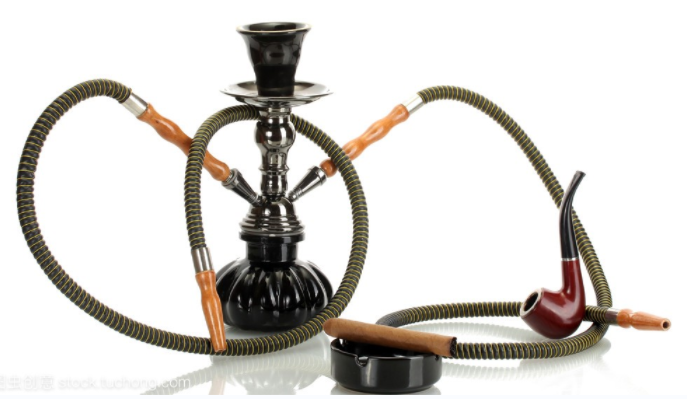
A unique flavour and a beautiful instrument
Water pipes were popular in South Asia and the Middle East from an early age, when smoking them was a cultural activity enjoyed by the wealthy upper classes and intellectual elite. On a personal level, it was a pleasure to smoke to relieve stress. On a social level, it was a way to bring people together. Traditionally, hookah smoking is shared, with people sitting casually around the hookah, with the pipe slowly being passed from one person to another. Friends, family and even business associates can gather to smoke a hookah together. The hookah thus serves as a link between people, soothing the atmosphere and facilitating communication.
Socialising over a hookah was a popular way of socialising in the Middle East
The modern style of hookah can be traced back to the 16th century in India. They were made of glass and the glass base (called a 'flask') was filled with water to purify the smoke. By the 17th century, hookah had become part of Turkish culture (the Turkish word for hookah is Nargila) and was a status symbol: it was served at royal dinners and diplomatic meetings. Offering hookah to a guest was a sign of the host's hospitality and trust, and it was considered disrespectful to the host if the guest refused.
An Indian woman smoking a hookah
A Turkish man smoking a hookah
It was in Turkey that hookah as a leisure activity was integrated into the culture of cafes and thus spread widely. When hookah was first introduced in cafes, the waiters were praised for their skill in smoking it. Today people sit in cafes for hours, relaxing with coffee and hookah while discussing current affairs and politics.

Traditional hookah cafes
In the 17th century, hookah entered Persian culture. Persian hookahs were made from rich, dark coloured rich Persian Ajami tobacco, and hookah artisans became more aesthetically conscious, redefining the look of their pipes and bottles with various decorative methods. Waterpipe smoking became an everyday activity that everyone could enjoy during this period.
Persian women smoking hookahs
A new profession of 'charcoal-jacks' emerged. In the cafes that served hookah, it was not uncommon to see several waiters with metal baskets containing hot charcoal moving from customer to customer. The charcoal in the hookahs cools over time and the heating function gradually diminishes, so someone has to keep adding new charcoal to the bowl. The test of the charcoal fillers is not only their ability to accurately remove the cold charcoal and add new charcoal, but they also have to re-test the hookah for the customer to get it burning warmly again.
A waiter tries out the hookah for a customer
The practice of hookah smoking continued to spread throughout the Middle East in the 19th and 20th centuries, gradually spreading to Syria, Lebanon, Palestine and Jordan. By the end of the 20th century, hookah had spread to every continent. Immigrants from the Middle East brought the practice to all corners of the globe, sharing their culture with the world. The popularity of hookah is due to its origins in traditional Eastern culture, and for many it is a way to experience something exotic. However, not everyone knows about hookah and its history can stir curiosity and spark dialogue between different cultural groups.
Just as it was over a hundred years ago, hookah is still a form of respect and hospitality for guests today. Family members, relatives, new and old friends still gather to deepen their relationships in this way that has been passed down through the generations. Waterpipe smoking is a cultural expression that brings together people from different social classes and with different religious and political views.
A hookah cafe in Berlin, Germany
Today, hookahs have become popular worldwide. Cafes and bars serving hookah are common in both large cities and suburbs. There are also hookah shops all over the world, and in the Middle East there is even a hookah delivery service.
Hookahs have been in China since ancient times and in modern times hookah bars are more common than you might think. Bars and cafes specialising in hookahs can often be found on the streets of cities with a high concentration of Middle Eastern traders, such as Yiwu, Guangzhou, Shanghai and Beijing. Some people in China also use hookah as an alternative to cigarettes, and reasonably priced hookah supplies are also sold on online shopping platforms such as Taobao.
Arab traders smoking hookahs in Yiwu
Why has the hookah culture endured and is still popular with young people in the Middle East? One important reason is that hookah cafes tend to have a more comfortable atmosphere and a more relaxed setting than the dynamic pace of nightclubs and the noise of bars. There are also young people who enjoy the nightlife but are unable or unwilling to go to places that serve alcohol for religious reasons, making hookah cafes the perfect choice for them.
At the same time, hookah is a symbol of a rebellious spirit. During the popular demonstrations in Lebanon at the end of 2019, numerous demonstrators brought hookahs to the march to smoke to express their desire to live in freedom and their contempt for the powerful.
Protesters smoking hookah in masks amidst thick smoke
While smoking cigarettes is still not universally acceptable for women in the Middle East (even in more westernised Lebanon, more traditional parents still do not support their daughters smoking), hookah smoking is a compromise between women's need to entertain themselves and society's expectations. Society is far more tolerant of women smoking hookah than cigarettes.
Arab women who smoke hookah
We will now look at the harmful effects of hookah on the human body. The smoke of hookah is dense and tasty, pleasant and non-irritating. Many people think that hookah is less harmful than most other tobacco products, such as cigarettes. Studies have shown that the carcinogenic elements and nicotine content of waterpipe smoke are lower compared to cigarettes because cigarettes produce smoke by burning tobacco, whereas waterpipe smoke is produced by heating moist tobacco. It is because of the lower nicotine content, ease of preparation and less potential for addiction that people in the Middle East are more likely to smoke waterpipe. But these comparative advantages do not mean that hookah is harmless to humans. In fact, hookah can cause greater lung damage to smokers and those around them. The water in the glass bottle doesn't actually filter out the toxins in the smoke, and you inhale 100 times more carbon monoxide when you smoke a hookah than when you smoke a cigarette. As a result, waterpipe smoking can also be seriously damaging to health.
An advertisement that says "waterpipe smoking is bad for your health"
People who are unaware of waterpipe smoking may be led to believe that it is similar to smoking drugs, but this is not true. Nevertheless, there are concerns in some areas about the health risks of tobacco. Some companies are now replacing traditional tobacco-using hookahs with tobacco pill substitutes or electronic hookahs. These alternatives are also becoming increasingly popular among the more health-conscious population.
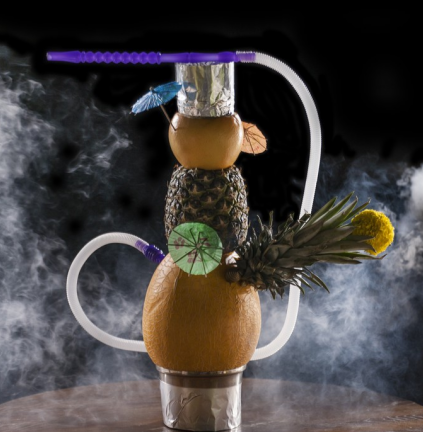
However, with the outbreak of Newcastle Pneumonia, the World Health Organisation has issued a serious warning against waterpipe smoking in public places as it is "the perfect environment for the spread of the virus". There is a growing concern about smoking hookah in public for hygiene reasons. Consequently, fear of contracting the virus has led people to reduce their visits to hookah bars because even if the mouthpiece and pipe are replaced, the pot, the bottle and even the smoke produced can contain viruses and bacteria. These viruses and bacteria can be spread from person to person and to those present who do not smoke. The powers that be in many countries - including the Lebanese government - have forced the closure of all hookah bars and cafes, and even called off hookah home delivery services without exception, with hefty fines for anyone breaking these rules.
Beirut, Lebanon, during the blockade, where all cafes were forcibly closed
Due to the nationwide home quarantine caused by the new crown epidemic, many hookah enthusiasts decided to purchase their own hookah devices and smoke them at home. Nowadays hookah smoking has become a routine activity in quarantined life, a way to pass time while sitting with your family or even working from home. Even if you smoke hookah at home, it is best if you use your own hookah pipe and do not share it with other family members, as this reduces the risk of spreading the virus.
Here, I have introduced you to the 5-step method of making a hookah, and I have also recorded a video to share with you, so that you too can enjoy the good times that hookah brings you.
5 steps to making hookah
The process usually takes about 20 minutes and the finished hookah can be smoked for about 1 hour until the flavour fades (you can add more ingredients to the bowl).
Materials: hookah set (flask, pipe, tray, bowl, pipe), burnt charcoal, hookah material, needle (or toothpick), heater (or stove), tongs
1. heating the charcoal (a special electric heater is recommended).
2. Once the charcoal is hot, add water to the flask until the lower end of the centre tube is submerged by one inch.
3. Place the hookah in the top bowl and mash it evenly without blocking the air holes for better flavour.
4. cover the bowl with aluminium foil (preferably thicker) and pierce the foil with a large needle or toothpick to secure it.
5. Now that the charcoal is ready, connect the pipe and add charcoal to the bowl and enjoy your hookah.
Contact: Info
Phone: +86-15018706725 (Wechat & Whatsapp)
E-mail: info@flavoursogood.com
Add: East Dongfeng Road, North of Baiyun Ave, 510440, Guangzhou